This summer I wanted to take a road trip like I did last summer, but of course it would have to be something different than I did last summer, but still within driving distance. So I settled on a trip down the coast. There's a few things I thought to do, and a couple others that turned out to be in the same area, so there was enough to make a good week of it. The first change of plans though was when I considered how far I wanted to go. I wanted to go all the way down to
Kanazawa and do things there, but it's 6 hours away by car and did I really want to drive that far? Sure, I could break it up some by stopping at sights along the way, but even that really only works in one direction. And after getting together the list of places I wanted to go, there wasn't really anything out of the way enough that there wasn't a train or bus going there anyway, so I could waste all that time driving myself, or spend it on a train catching up on my reading. So in the end I ditched the driving aspect of it and made it a train trip instead.
In Yamagata, just south of here, there's an onsen I wanted to go to and a couple mountains to climb, but being off the train route I would have to skip them. They're relatively close to here though, so they're a trip I can make on any long weekend later on. Near Kanazawa too it would have been nice to drive up the
Noto Peninsula and see the sights there, but it's a relatively minor thing to sacrifice for the convenience of taking the train instead.
So in the end the three main attractions I decided on were Kanazawa,
Shirakawa-go, and
Sado Island. I procrastinated on planning this trip for a long time, so just finding the places that I wanted to stay at along the route was a bit of a challenge, and I didn't get everything I wanted, but after finally coordinating my stays the itinerary was to go straight to Kanazawa first, then to Shirakawa-go and
Takayama, and Sado last.
So on Sunday morning I left town and spent the whole day travelling down to Kanazawa. I got there in the late afternoon and checked into my hotel, and since there was some daylight left I headed over to check out one of the parks that are Kanazawa's main claim to fame, Gyokusen-en, passing through the grounds of
Oyama Shrine on the way. It's fairly small, so I had already gone around it when the announcement came near 5pm that it would be closing soon. On the walk back to the hotel I looked for somewhere to grab dinner and just happened to stumble across a Mexcan restaurant, the first I'd seen in Japan! So of course I had to eat there. The restaurant was done up in a Day of the Dead theme, I guess one of the only things Mexico is known for in Japan. I ordered a couple tacos and a frozen margarita, and in the meantime they brought out the chips and salsa. Now, in the US you're used to a big basket of chips coming out that are refilled for free on demand, but what we got here was only three small chips. And when the actual tacos came out, they were quite small too, which wouldn't necessarily have been unexpected, except that for the price I thought they would be a little more substantial. Well, in the end it all tasted fine and at least the margarita was a reasonable size.
 |
| A nice little waterway lining the sidewalk on the main road from the station. |
 |
| A piece of public art. |
 |
| The path leading to Oyama Shrine. |
 |
| The non-traditional architecture of the shrine gate. |
 |
| The path around the shrine grounds. |
 |
| A water feature at the shrine. |
 |
| More of the shrine grounds. |
 |
| A nice statue they had. |
 |
| The shrine building itself. |
 |
| Gyokusen Garden in the evening light. |
Back at the hotel was something interesting. They actually had an open bar in the evenings. Only for a couple hours after dinner, and only a small selection (beer, wine, and whiskey highballs), but I was quite surprised to see such an amenity at a cheap business hotel, and there were little cheese snacks and
kakipi besides.
The next day started with vising
Myoryuji, the ninja temple. Not actually used by ninjas, but called that because of the many secret passages and defensive measures built into it by the local lord who had it designed as a sort of fortress. Back in the day the government had a regulation limiting buildings to three stories, I guess maybe to stop local lords from building impregnable castles, so to circumvent it this temple was designed to look from the outside like it complied with the regulation, but in fact has many hidden layers on the inside. It requires a reservation for the tour, so this was actually the very first time I made a phone call in Japan to make the reservation a couple days before I left.
Not only do they not offer English tours (understandable), but they don't even allow interpretation by others of the Japanese tour, although recently they've made a booklet of the entire tour in English translation that you can consult at each stop along the tour, so it worked out. My one complaint is that the whole thing was very rushed and didn't give you much time to appreciate everything you were seeing before being whisked away to the next attraction, but there's something on their website about changing the tours from every half hour soon to every hour, so maybe they're actually extending them, which would be nice.
 |
| A larger stream along one of the side streets. |
 |
| All the shops have walkways over it. |
 |
| The Godburger. I didn't eat there though. |
 |
| My only shot of the Ninja Temple. |
 |
| More public art. |
 |
| The tree-y (arboreal? sylvan?) median of the main road. |
 |
| Pretty much every city in Japan these days makes uniquely representative manhole covers like this for themselves. This is a representation of the famous lantern in Kenroku Garden. |
 |
| A path on the grounds of Ishiura Shrine, next to Kenroku Garden. Wooden prayer tablets are tied all along it. |
 |
| Same path. |
 |
| Lots of tablets near this end of the path. Some were in English even. |
After that I went over to
Kenroku-en, Kanazawa's biggest attraction as one of the Three Great Gardens of Japan. Unlike the other Kanazawa gardens, there's a fee to enter it, but it's easy to see why once you get in: the whole thing is meticulously planned and upkept, and there were guys all over the park all day maintaining the paths and plants. I wouldn't say there was anything big that sticks out about it to talk about, but just lots of little streams, ponds, bridges, waterfalls, teahouses, statues, groves, and all sorts of little things that just add up to make a really amazing place. I spent at least a couple of hours there, walking through all of it.
 |
| Stream through Kenroku-en. |
 |
| Pathway up a hill. |
 |
| Big deal, he wrote a haiku about my town too, and our stone monument is way bigger. |
 |
| Apparently this is a statue of Yamato Takeru. Not sure why he's especially important to this place. |
 |
| I wanted to get the two women in kimono in the shot. |
 |
| A teahouse on the water. |
 |
| A big pine tree with all its branches propped up. It's common for decorative pine trees like this. |
 |
| The view from the waiting room in the teahouse. |
 |
| Other side of the windows. |
 |
| A big fountain. |
 |
| Another teahouse on the left. |
After that I headed across the street to the last of these three parks that are all right next to each other, Kanazawa Castle Park. This is where Kanazawa Castle used to be (and actually, a lot of cities in Japan have parks like this where they used to have castles), and parts of the castle have been rebuilt and can be toured for a fee. Other than that, there's not too much to see here park-wise, and a lot of it was open and unshaded, which made me not want to walk around it too much in the intense heat of the day. Even besides the parks, Kanazawa itself it probably the most beautiful city I've ever visited. There are trees all over, which is pretty rare in Japanese cities, and lots of interesting public art too.
 |
| Part of the old castle walls. |
 |
| An interesting fountain/pool near the castle park. |
 |
| One of the old castle gates, recently reconstructed. |
 |
| Not sure exactly what this is, but it was there. |
 |
| A big section of a wall and a tower. |
 |
| A side path that went down from the top. |
 |
| Gyokusen Garden next door again, in the noon light. |
 |
| The castle area from the top of a battlement. |
 |
| The moat. |
 |
| More shots of Gyokusen. |
There were a couple other attractions to round out the day with before heading to my accommodation for the night, but it turned out that they were both closed on Monday: The 21st Century Museum of Contemporary Art and the D.T. Suzuki Museum. Well, I went to them both anyway, because they both have things to see outside too, but after that headed over to the station to wait for my bus. I decided to wait down in the quieter basement level, and happened to stumble upon a public piano, so I bashed out the couple of little things I'm able to play on that while I was waiting.
 |
| The pool outside the D.T. Suzuki museum. |
 |
| More public art. |
 |
| An interesting map of the city. The legend on the right is in English. |
 |
| The main gate of the station. |
 |
| The public piano in the station basement. It says something about how it used to belong to an elementary school and they wanted it to continue being played. |
This evening I was staying in the
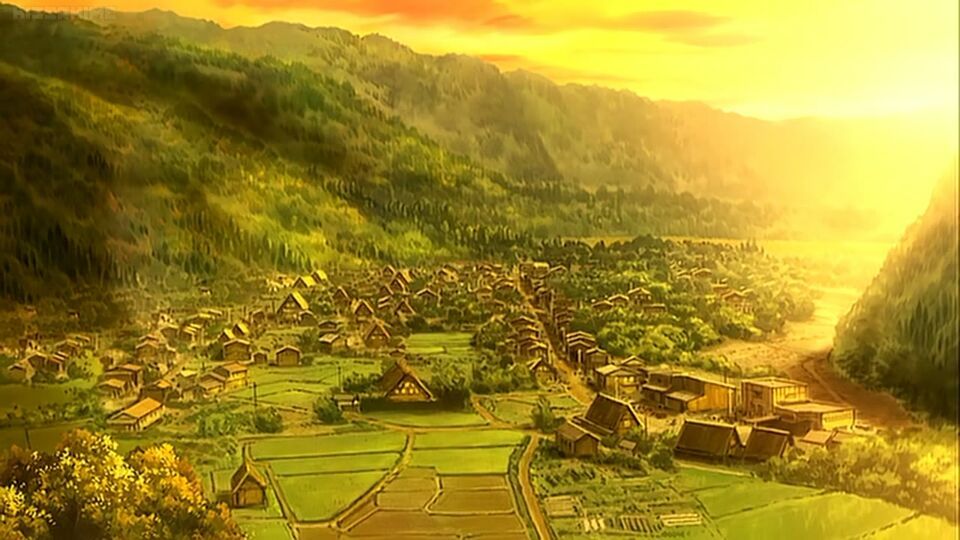
Yuwaku Onsen region, about an hour outside the city. The only reason I had even heard of this place is because of this anime,
Hanasaku Iroha, which takes place there. Actually, the exact onsen that it was modelled after had just closed down this March, but I stayed at the one of the many others that had reasonable prices and I could get a reservation at on such short notice.
There's two sections to the place, one is a very small flat neighborhood with grid streets, and the other is a road going up a narrow valley, which was the more scenic spot and the one I was staying in. The first thing I noticed about the place I was staying was all the umbrellas tied upside-down under the roof in front of the entrance. Turns out there were a bunch of swallows that had built nests up under the eaves, and instead of just destroying the nests, they let the birds stay and tied up the umbrellas to stop them from shitting on the patrons, so I thought that was nice of them.
After checking in I went back out to take some pictures of the area before the sun set. There was a path heading up to the shine and temple of the area, so I could get some nice shots from up there. Also, dinner wasn't included, so I had to go to the noodle shop next door which was the only restaurant in the area.
All down the road in front of the shops were many cardboard cutouts of the characters from the anime, and they were on a few posters for events in the area too. Back in my room I discovered that the fridge was stocked with drinks, including a Hanasaku Iroha themed "cider" drink. ("Cider" in Japan is a cross between a lemon-line soda like Sprite and a ginger ale.) And when I wandered down to the onsen to take a bath, the rec room outside of the baths had a bunch of pictures on the wall of the characters too. There was a small outdoor bath as many of these rural onsen tend to have, but aside from a slight breeze and not being all steamy like the enclosed indoor bath, there wasn't much to see as it was still all screened in by a bamboo fence because of the other nearby buildings.
 |
| One of the swallows' nests. |
 |
| The Yuwaku Onsen valley in the evening light. |
 |
| The interesting glass-enclosed shrine. |
 |
| The path to another shrine. |
 |
| One of a few of these lining the street. |
 |
| Posters featuring the show's characters. |
 |
| This burdock root cracker was super tasty. |
 |
| In the rec room outside the bath. |
 |
| Also in the rec room. It's for their annual festival, which was featured in the show. |
 |
| Nicely stocked fridge. |
 |
| The themed cider. |
 |
| A map of all the inns in the area. |

 |
| Even this silly bench matches. |
 |
| This was hanging in my room, but I can't tell what character it's supposed to be, so I took a picture to show my calligraphy teacher and ask him. |
 |
| A final piece of public art in Kanazawa. |
In the morning they served a nice big breakfast, and afterwards I went back out to take some more pictures in the morning light, in case the evening ones wouldn't come out good, and also went over to the other area to take pictures of the other onsen buildings. Then, waiting for the bus back into town, some random middle-aged guy came from across the street and tried to talk to me. Whatever dialect he was speaking, I couldn't understand hardly a damn word of it, but that didn't stop him from going on for about five minutes.
Back in the city I waited back on the basement level of the station again, although someone else was using the piano this time, until my bus to Shirakawa-go arrived. I had to take a kind of later than I wanted bus because of the ride back into town from the onsen, so I was a little worried I wouldn't have enough time in Shirakawa, although a lot of people online were saying there wasn't that much to do and even just a couple hours was enough. Luggage storage was also supposed to be a problem since there were very few coin lockers, but there turned out to be a building in back of the bus terminal that acted as overflow, so luggage was no problem.
The main attraction of Shirakawa is the "gassho-zukuri" style of houses. These are built with steep thatched roofs to withstand the heavy snows that the region gets, and then in the attics of them many people raised silkworms and made silk (
sericulture). There are a bunch of them that are bed-and-breakfasts, but with my procrastination in planning there was no way that any of them had vacancies, so I wouldn't be able to spend the night in one. Aside from those, there are many others that are open as museums, although aside from the architecture of the houses themselves, there was mainly only displays of old farm and sericulture tools to see. One of them is attached to a Buddhist temple though, which also has the same architecture with the thatched roof, and is supposed to be the only temple in the world that does.
At the other end of town from the bus terminal is the folk village open air museum, which is a little more in-depth and museum-like, so that was one of the more interesting places to see there. And the final thing to do was go up the hill nearby to get the famous view overlooking the whole town. This is replicated in another anime (originally a game) called
Higurashi: When They Cry, which takes place in a creepy middle-of-nowhere rural town like this. And I also bought some souvenir snacks here for the teachers back at the school.
 |
| The first houses on the way from the bus terminal. |
 |
| Found in one of the museum houses. |
 |
| From the attic of one of the museum houses. |
 |
| In the other direction. |
 |
| They made me take this photo so they could try to sell a big version back to me for ten bux. |
 |
| The gate of the temple. |
 |
| Inside the temple. |
 |
| The altar. |
 |
| Bridge to the other side of town. |
 |
| How the roofs are made. |
 |
| A working waterwheel. |
 |
| A poster featuring the anime. |
 |
| A firetower. They take fire seriously here. |
 |
| An old shrine in the open air museum. Moved here from somewhere else. |
 |
| "Cat door" |
 |
| The view from the lookout point. |
 |
| Digital zoom |
 |
| Bears a resemblance to the anime. |
 |
| More digital zoom. |
 |
| From another vantage point on the way down. |
 |
| Same with digital zoom. |
Since I missed out on staying in the houses here, I was staying in the next city over, Takayama. I had found a nice cheap little ryokan of the type I like to stay in when I'm in cities, so after checking in there I went off to wander the area in search of someplace to have dinner. There were plenty of restaurants around, but none of them really had anything I was in the mood for at the moment. I really felt like curry, but was pretty much set, after nearly an hour of wandering, to settle for the okonimiyaki place I had seen, when I finally just happened to wander upon a curry place!
This city was actually bigger and far more touristy than I expected and there was English all over the place, so when I first walked in the waitress immediately approached me and said "This restaurant, only curry," as if I would be dissuaded, to which I replied "うん、カレーほしい" ("Yeah, I want curry") and was sat at the counter in front of the grill. Oddly this was one of the few restaurants here that didn't have an English menu, but of course I had no problem with the Japanese menu and eventually settled on the "stamina curry", which seemed like a good choice after all the walking around in the heat that I had been doing in the past couple days.
It took a while to come out, but it was amazing. Nice and spicy for one, which can be hard to find in Japan, but also whatever sauces and spices they were using were amazing. There was something that tasted like barbecue sauce slathered around one side of it, and I can't even guess what else might have been on it, but it was the best curry I've ever had. I would say even that it was the type of curry that you'd call American-style curry, if America ate curry. And besides the curry, the place was playing some old American rock music, and there were posters up all over for music events and things, and the place was even called 弱尊, which when I took the time to consider how it might be pronounced, turns out to be Jackson. If you're ever in Takayama, you can't pass this place up. They also
sell their curry mix online, but trying to make it yourself it would never turn out the same without all the other sauces and topping they were using.
I could barely finish it all (the chef behind the counter had asked how much rice I wanted and I figured asking for the small amount might not be enough, knowing Japanese portion sizes, so I got the regular amount, which turned out to be the perfect amount in proportion to the amount of curry you get), and towards the end he talked with me a little about where I was from and where I was living, and said he didn't really know much about what was in Akita, aside from, I guess, a famous Christian graveyard or something? I'd never heard of it. Looking into it after I got home, he was talking about
the grave of Christ.
 |
| The world's best curry. I told him so as I left. |
Well, despite not expecting much from this town since I had never heard of it before, it actually turned out to be one of the biggest highlights of the trip, because I found plenty of interesting things to do the next day too. First, as I was leaving the inn in the morning, the owner mentioned the morning market, so I went to check out that. She offered to keep my bag for me too, but the inn was a little out of the way, and I had to immediately go to the bus terminal to buy a ticket for this evening anyway, so I just used the coin locker there. It turns out that the heavy rains a week earlier had damaged some of the train tracks, so instead of taking the train up to Toyama like I had planned, I would have to take the bus.
The morning market was a bunch of little stalls against the river on one side, and the regular shops across the street on the other side, and they sold a mix of produce and handmade jewelry and little souvenirs. I didn't get anything, but it was cute. Then I continued on to walk through the old section of town that still had many old Edo-period buildings, and even a rickshaw driver at one point. There was a sort-of museum here called the
Kusakabe Folk Museum, which, like the Shirakawa houses, besides just seeing the house and some historical items, there wasn't much to it, although it was a pretty big Japanese-style house, and in the old warehouses in the back there were also small crafts exhibits too.
 |
| The Old Town. |
On reaching the other end of town from the train station, there was a big shrine complex, Sakurayama Hachiman-gu, that went quite a ways up the hill there. Also part of the complex (or at least right next to it), was a museum/exhibition of festival floats for what must be a pretty big festival that they have here. There wasn't much to the exhibition except the actual floats sitting there to look at, but they were quite tall and very ornate, and there was an audio tour that had an English version. Apparently they switch out the floats over the course of the year, so they also had some pictures of the ones that weren't there at the moment. (I didn't think to get any pictures, so you can just google it yourself:
"takayama matsuri yatai kaikan") Then, included with this ticket, was a ticket to the giant
Nikko model next door. I had been to the real Nikko a year and a half ago, and this was pretty much a scale model of the entire complex in painstaking detail. Again, not really anything here but the model, but it was a really impressive model. (Also didn't take any pictures of it:
"takayama sakurayama nikkokan")
 |
| The area in front of the shrine office. |
 |
| The main shrine at the top of the hill. |
 |
| An Inari subshrine. You can tell it's an Inari shrine because of the foxes. |
 |
| Read carefully to understand the next image. |
 |
| So it's basically a bunch of ancient spitballs. |
 |
| They made me take this photo so they could try to sell a big version back to me for ten bux. |
The next thing that looked really interesting here, and in
contrast to all the more Edo-period stuff, was a museum of Showa-era
life of a modernizing and Westernizing Japan. This was no stale museum
with big signboards of text in front of exhibits behind glass though,
but just a storefront building made out like a streetscape and
absolutely packed with whatever stuff they could collect from the time,
and then sorted into themed rooms like a home, restaurant, classroom, or
doctor's office, and everything was pretty hands-on, so you could pay
for a song from the jukebox, get inside the old three-wheeled truck,
watch an old movie in the theater (they were playing Godzilla, the
original), and play the pachinko and pinball machines, and yes, the NES
too. Super cool place and I recommend it as much as last night's curry. I
wish I had thought to get pictures of it:
"takayama showa museum".
Finally, there were two places left, but both a bit of a walk across town on the other side of the train station. The first one was an art museum called the
Hikaru Museum, and the other was the
Hida Folk Village. The Hikaru Museum sounded really interesting because not only was it supposed to have some bizarre architecture like a Mayan temple built into a hillside and enormous halls on the inside, but the collection itself had great reviews online too, and the whole thing was supposed to have been put together by some
Mahikari organization. But it was a good thing I checked before I set off, because it turns out it was closed today. So that left the Hida Folk Village, but I didn't have too much time left, and I had seen what was probably basically the same thing in Shirakawa yesterday, so I decided to just call it there and wandered the town a bit more before going back to the bus terminal.
So I took the bus to Toyama for the night, where I didn't plan on doing anything, but just use it as a waypoint on the way to Sado tomorrow. Checked into my hotel and went out to wander the city in search of dinner. It seemed like a fairly neat city, with a tram line up the main street from the station and a nice-looking park nearby, so it's too bad I didn't really have any time to do anything there, but eventually I came across an
okonomiyaki place that I decided to get dinner at.
I've made okonomiyaki at home plenty of times, even back in the US, but this was my first time actually eating it in a real okonomiyaki restaurant. (I'd had my first okonomiyaki in Japan a year and a half ago from a stall at Washinomiya Shrine around New Year's.) There's little griddles at each table (or at the counter, where I was), which is where they put the thing to keep it warm as you're eating it, but then it's served with only a small metal spatula to eat it with, which I had heard about online, but still feeling weird about just putting a spatula up to my mouth to eat, I went to the cook behind the counter (in Japanese), "This is my first time..." and he understood and showed me how to cut it with the big spatula and let me know it was fine to eat it directly off the little spatula and I had my first real okonomiyaki experience.
The next morning I took the train off to Naoetsu, which is the western port on the mainland where you can take the ferry to Sado. From the train station there was a bus to the port, and the little tourist office there where the bus waiting room was had a bunch of English signs on how to take the bus to the port, so I guess they get a lot more foreign tourists going to Sado than I would have thought. There was another guy there waiting for the same bus, and it didn't come on time, and the lady in the office kept assuring us that it must be coming any minute, and getting more and more flustered as it continued not to come, and made calls to the bus company, and eventually it turned out the bus wasn't coming for whatever reason, and instead some little replacement van came and whisked us off with not too much time to spare before the boat left.
It was a car ferry, and the passenger boarding went straight over the car hold, so you could see there were a couple of semis on there and realize that literally almost every artificial thing on that island must have been taken over there by boat or plane, all the steel, concrete, asphalt, etc. Now that the gold mine is shut down (since 1989), I wonder if it has any economic activity left to justify the expenses of carrying all those things over, or if it's just going to go into a slow decline like all the other minor islands. Well, it still has tourism at least.
The trip was about an hour and a half (shorter than the two hour car ferry from the eastern port), and I got on the bus from the port on Sado with a few women who were on the same boat and took the hour bus ride to the center of the island where my hotel for the night was. The only reason I decided to stay the night on the island instead of just making a day trip of it was that the car ferry left at a ridiculous six in the morning and there was no way I was going to try to do that.
 |
| Sado Island |
So on the bus the driver asked me where I was headed and I told him the name of the hotel, Hachimankan, and he said in return, Yahatakan?, and I repeated Hachimankan, and he let me know that, nope, although the way it was written looked like it could be pronounced that way, it was actually pronounced Yahatakan. The guy was cool though and talked to me a bit in English on the way over there.
This was pretty much the only big hotel on this island, and it's kind of Western-style on the outside but Japanese-style on the inside, being about five stories tall with a restaurant and karaoke and things, but then all the rooms are Japanese-style and of course there's a big public bathhouse, and there's a big forested yard out front with some paths winding through it, but still inside the complex walls, which kind of reminded me of the resort we stayed at in Nampo in North Korea. And it turns out the previous emperor and his wife stayed here at one point and they had a picture of them hanging on the wall in the lobby from their visit. My room plan didn't come with dinner though, and this place isn't really near town, so the only other option being to wait until the bar opened and getting something there (noodles or whatever), I opted to walk way over into town and look for something. Google Maps was really awful here, because its listings were really outdated. Many of the places it listed seemed to just not exist, shut down maybe, and a bunch of the others were lunch-only, so I had to walk quite a bit, including through one neighborhood that had been redeveloped with a road layout that didn't even match Google anymore, but eventually I finally came across a place.
 |
| I already mentioned how all towns have their own manhole cover designs. This is this town's. |
As I went in it seemed that the neighbors or some family were there talking with the mother and grandmother behind the counter, but they scuttled out when I came in and I made my order and ate quietly with no one else in the restaurant and the three of us just watching the baseball game on TV. In a little family-owned restaurant off the beaten path like this I always expect them to be a little interested and ask where I'm coming from and such, and sometimes they are, but then sometimes like this, even though I try to make a point of showing that I know Japanese when I order, they maybe just don't feel comfortable with the language barrier and mind their own business.
So then after dinner I made my way back to the hotel. My room was in some kind of one story annex building off the main building and the entrances to each of the rooms had this fancy Japanese-style gate with a lantern and tiny rock garden beside it, like each room was made up to seem like its own separate little building. The room was mostly like any of the other nice Japanese-style inns I've stayed at though, so I just went off to have my bath and went to bed.
The instructions for the tour said that I would have to take the public bus from the hotel into town where the tour bus would pick us up, but when I checked into the hotel the guy told me that the bus would be picking me up in front of the hotel. Just to make sure I doublechecked again later and tried to make very clear, I don't have to take the public bus? It's coming directly to the hotel?, and he said that it was. So in the morning after breakfast I waited for the bus, and a big bus came from the same company, but for a different tour, and every single other person waiting in the lobby got on it, but eventually a few minutes later up pulls a van to take me and one other family. I thought it was going to take us into town to meet up with the main tour bus, but no, this was it, we were the only ones that had signed up for this tour that day, so it was just me and this other family in this van with the driver as our guide.
First we stopped at what looked like a tourism info place and the driver ran in and got us some cell phone straps with what looked like a chicken on them, but was actually a very loose interpretation of a Japanese
crested ibis. The island is a bit more than an hour across by car, and we were going to places spread out across it, so a lot of the tour was little twenty minute or so drives between our destinations. I had landed at the southwestern port and taken the bus up to the western center of the island where the hotel was, so now our first destination was the old gold mine in the northwest.
There were two possible tours here, one of the old Edo period mine, and one of the more recent Showa period mine, but me and the family both chose the older one. This one had lots of mannequins of mine workers set up, some of them robotic, and showed all the stages of mining and pumping water out and things. The actual underground portion in the tunnels was actually pretty short, but then there was a small museum aboveground too, showing how the gold was refined and coins were made and things. I bought a gold coin on a strap to hang on my phone to replace the kokeshi one I got on last year's summer vacation.
 |
| This guy records how much each worker takes out of the mine |
 |
| The break room. |
 |
| A blessing ceremony for a newly-found vein (the squiggly thing on the wall in the back). |
 |
| It says it's an actual 25lb gold bar worth half a million dollars, but I'm not sure if I believe it. But the point was if you could lift it with one hand (there was a hole into the display for your arm), you could get a certificate. I didn't read that part until I looked at the picture afterwards or else I would have gotten one. |
 |
| The gold mountain in the center of the image, split in half by the mining activities. |
 |
| The annual changing of the strap. |
Next we went back to the western center of the island to go to the Gold Park. There was a small museum here with some displays of gold items and stuff, but the main thing to do here was gold panning. They had a bunch of long concrete troughs filled with sand and pebbles and they showed us how to scoop it up and agitate it so the gold would fall to the bottom (being denser than the sand), and flush out the pebbles and sand on top, until we could see the gold in the fine black sand that was left. He made it look easier than it was, and I didn't have much success, but I did get two little flakes out of it, and they provided a little tube for us to deposit it in. I assume the way the placed worked was that they sowed the troughs with bits of gold leaf every morning, which was what we were finding, but it was still fun to do and see how it worked.
After that we went down to the southwestern port to one of the docks there where we would ride in
tarai-bune. They're basically big wooden tubs with a single oar tied to them that you wiggle back and forth to propel them. The lady you were riding with would take you out into the water and then let you try if you wanted. It took a little bit of practice, but I got the hang of it fast enough, and then afterwards I was able to go back to the ticket window to get a certificate that I was able to row it for at least 5 meters.
 |
| A head-shaped rock on the way over. |
 |
| The tarai-bune dock. |
 |
| The tub boats. |
 |
| On the open water. |
After that we went to a place nearby for lunch, which was already prepared for us. If I recall correctly, it was a seafood fry. There was also a big gift shop downstairs where I got some souvenir cookies for my coworkers. And then after that we went east across the island to the town near the eastern port to visit the "toki" park.
The "toki" is the
Japanese crested ibis. They apparently used to populate the whole island and a lot of the mainland, but when farmers started using pesticides it built up in the food chain like mercury in fish and killed them all. They went extinct in the wild in Japan recently, and were thought to have in China in the past too, until a small population was found there in the 80's and now they're breeding and releasing them here (with education programs for the farmers too). This is why they gave us the phone straps featuring them at the start of the tour.
 |
| Saw these ones in the field of the park and took a picture from a distance with digital zoom. As I crept closer afterwards, the sign came into view that said "These are decoys"... |
 |
| The actual, live, birds. |
 |
| They gave me this origami ibis. When you pull its tail, the wings flap. |
And finally they took us over to the eastern port in time to catch the car ferry. Instead of the two and a half hour car ferry ride though, I opted to splurge on the one hour jetfoil ride so I'd have more time in Niigata to get dinner before catching my train home. This being the first time I'd heard the term "
jetfoil", I assumed the "jet" part of the name was just a reference to its speed, but it turns out that no, it's in fact a boat with literal jet engines strapped on the back (I mean, it's a little more complicated than that, but it sounds the same). There's apparently only a few left in operation worldwide, mainly in the Hong Kong/Macau area and southern Japan.
So that was pretty cool, and then I caught a bus to the train station, got my dinner there, and hopped on the last train back home.


No comments:
Post a Comment